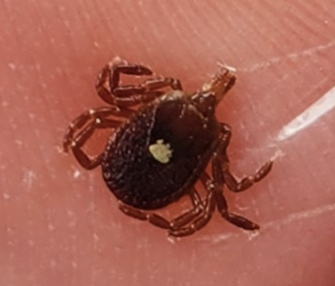
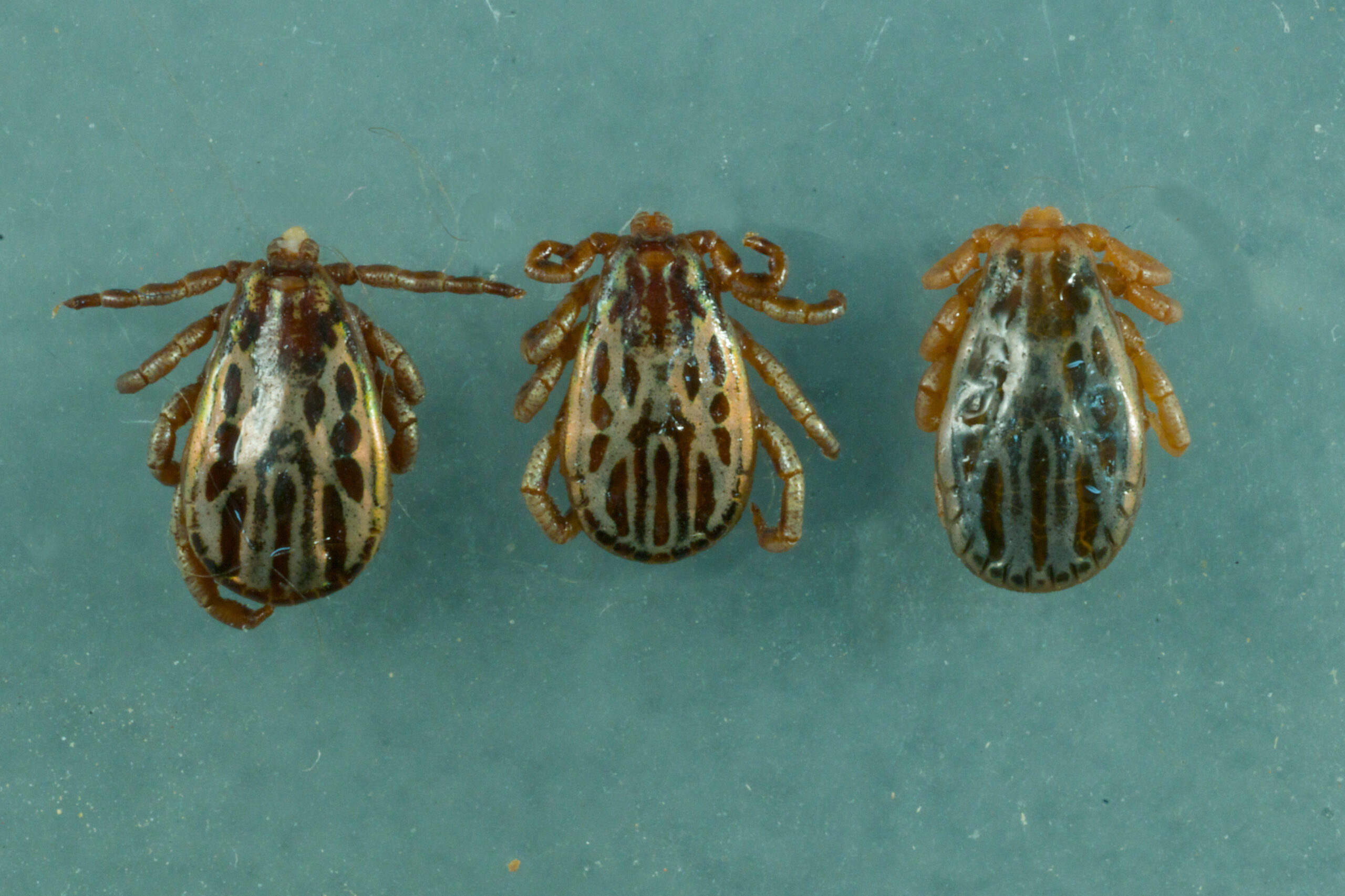
Listed below are three common tick species in New Jersey that are likely to ⭐️bite humans and can carry pathogens that cause tickborne diseases in humans. Each species is associated with different tickborne diseases. While these ticks can carry pathogens, not every tick is infected. For this reason, NJ Ticks 4 Science! only 🧪tests these three species, as they are the ones most likely to carry pathogens that can cause human disease.


🧪⭐️ Blacklegged (deer) tick

Scientific name: Ixodes scapularis

Adult female blacklegged (deer) tick on a yellow surface next to a ruler for scale.

🧪⭐️ Gulf Coast Tick

Scientific name: Amblyomma maculatum

Male Gulf Coast tick inside a clear plastic bag next to a person’s fingers for scale.

In addition to the three species listed above, New Jersey residents may also encounter the American dog tick (Dermacentor variabilis) and the Asian longhorned tick (Haemaphysalis longicornis). At this time, these species are not known to transmit pathogens that cause human disease in New Jersey. For this reason, NJ Ticks 4 Science! does not test these ticks for human pathogens.

⭐️ American Dog Tick

Scientific name: Dermacentor variabilis

Female American dog tick (left) and male American dog tick (right) shown side by side on a blue background, with a ruler above for scale.

⭐️ Asian Longhorned Tick

Scientific name: Haemaphysalis longicornis

Female Asian longhorned tick on a green leaf.

Many NJ ticks are unlikely to bite us and are usually associated with specific animals such as raccoons or squirrels or birds. If you are a hunter, handle livestock, are a wildlife rehabilitator or work in animal control or run a dog rescue, we might encounter some of these ticks and we encourage you to submit them to NJTicks4Science!

Other Ticks of New Jersey