Tick Removal

A detailed description of this diagram is available below.
-
- Crawling: The tick crawls on the skin in search of a spot to bite.
- Preparing to feed: The tick positions to embed itself. Palps spread outward; the feeding structure has not yet entered the skin.
- Embedded: Mouthpart feeding structure is inserted; the tick is embedded and can blood-feed.
- Removal: Remove embedded ticks by pulling steadily outward with tweezers a tick remover or your fingers!
Note: The diagram also includes labeled tick anatomy (palps and feeding structure/mouthparts), which are used to anchor the tick as it begins embedding.
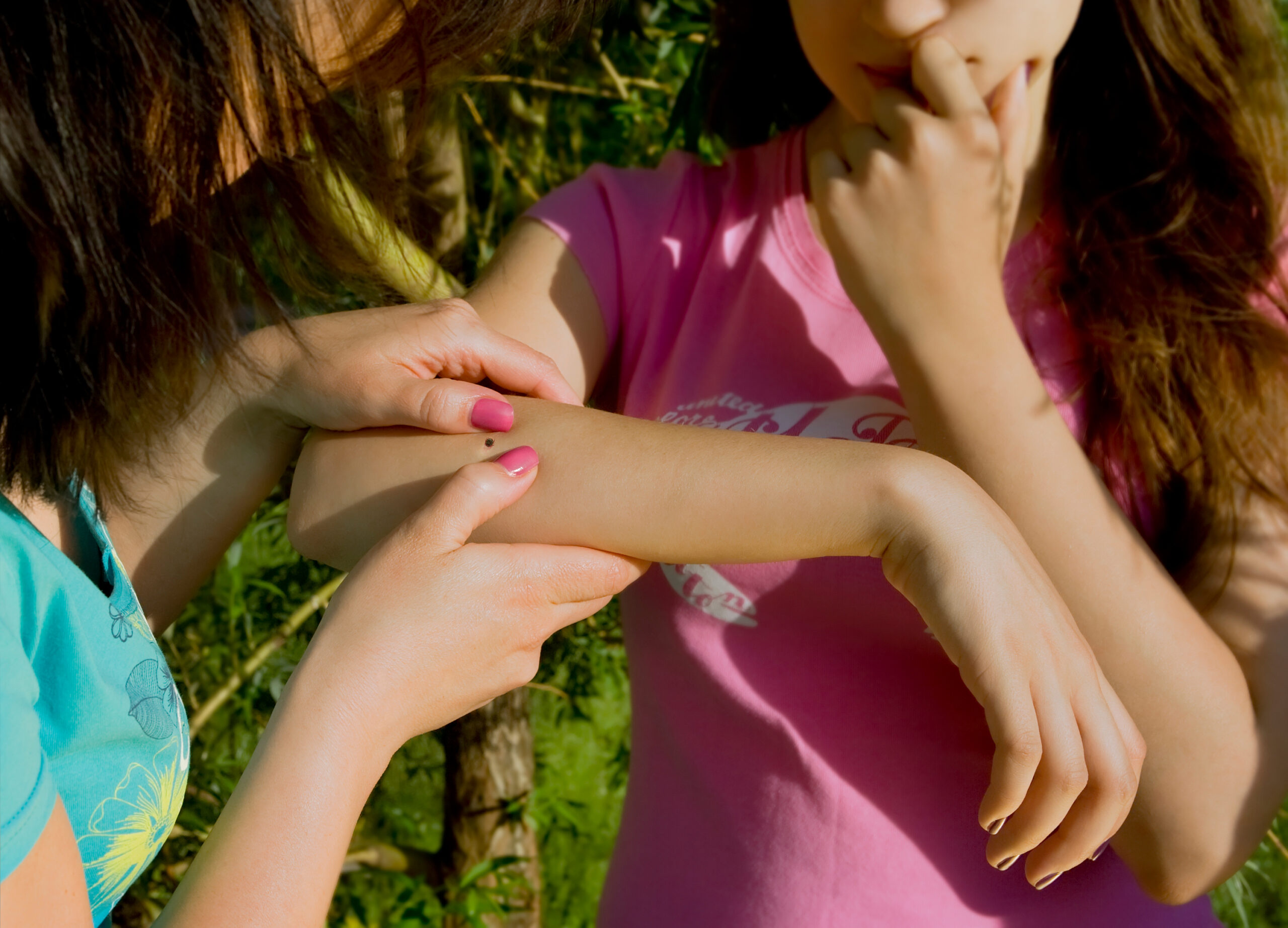
When encountering an embedded tick, remove it with tweezers, a tick remover or your fingers. Place the tick removal tool (or your fingers) as close to the skin as possible and grasp the tick. Pull outwards steadily.
The key is to be patient! The mouthpart has backwards-facing barbs that make it harder to remove. If the mouthpart does stay in the wound when you remove the tick’s body, sterilize the area and do not worry – your skin will push it out as it heals, like a splinter.
Once the tick is removed, place the tick in a sealed plastic bag and submit it to NJ Ticks 4 Science! with its tick ID number.
Importantly, clean the bite wound with rubbing alcohol. Wash your hands and tweezers with soap and water after removing all the ticks you have found after completing your thorough tick check.
If you experience nonspecific flu-like symptoms with or without a fever after the tick bite, seek medical attention. There are ticks in New Jersey that can be infected with tickborne pathogens. Preventing tick bites is essential to keeping you, your family, and your pets safe when enjoying the outdoors!
Tick Removal Methods
Tick remover: slide the tool under the tick as close to the skin and mouthparts as possible, then lift or pull steadily outward.

Fine-tipped tweezers or slant-tipped tweezers: Grasp the tick as close to the skin and mouthparts as possible and pull steadily outward.

Fingers: If no tool is available, grasp the tick as close to the skin and mouthparts as possible and pull steadily outward.

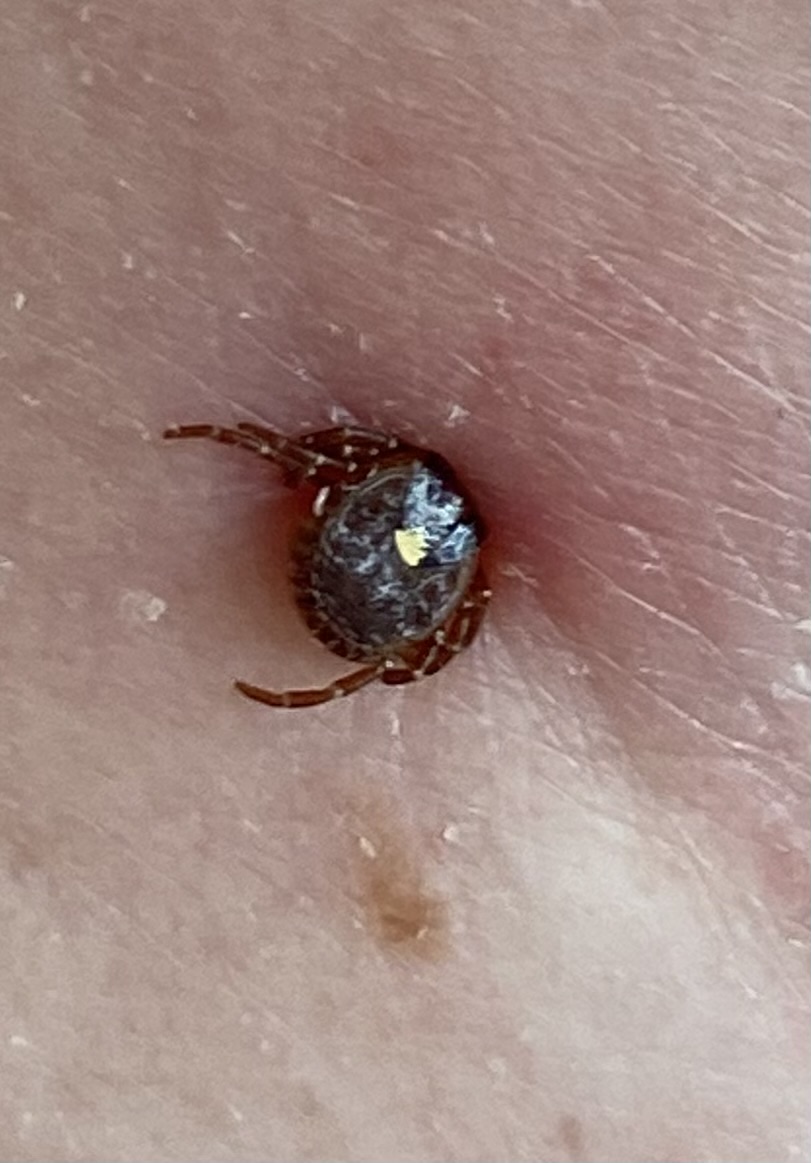
What An Embedded Tick Looks Like!