Groundhog Tick
Scientific name: Ixodes cookei
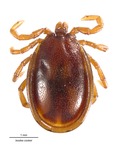
The groundhog tick is distributed across the eastern and central U.S. Its preferred hosts are groundhogs. This tick species may transmit the Powassan virus, an emerging tick-borne disease. The variant of Powassan virus it carries (POWV) is different from the Powassan variant carried by the blacklegged tick, which is called “deer-tick virus” (DTV). To view specific differences between groundhog ticks and blacklegged ticks, visit the website of the Institut National de Santé Publique du Québec on Ixodes cookei.
Hosts
As the common name indicates, the preferred hosts of these ticks are groundhogs (woodchucks), although this tick species can also be found on other small-to-medium mammals such as raccoons, foxes, skunks, rodents, and pets. The groundhog tick rarely bites people but is considered a zoonotic vector of the Powassan virus (POWV), an emerging public health threat.
Habitat
Groundhog ticks thrive in forests, hedgerows, and pastures where their hosts are common.
Locations in NJ
Groundhog ticks were first reported in New Jersey in Bergen County and were identified in Burlington County, New Jersey, in recent years. It is likely to be present across the state associated with groundhog populations.
Active Months
These ticks are primarily associated with groundhogs and often remain inside their burrows. However, in nearby New York, different life stages were found questing in May (adults and larvae) and November (nymphs).