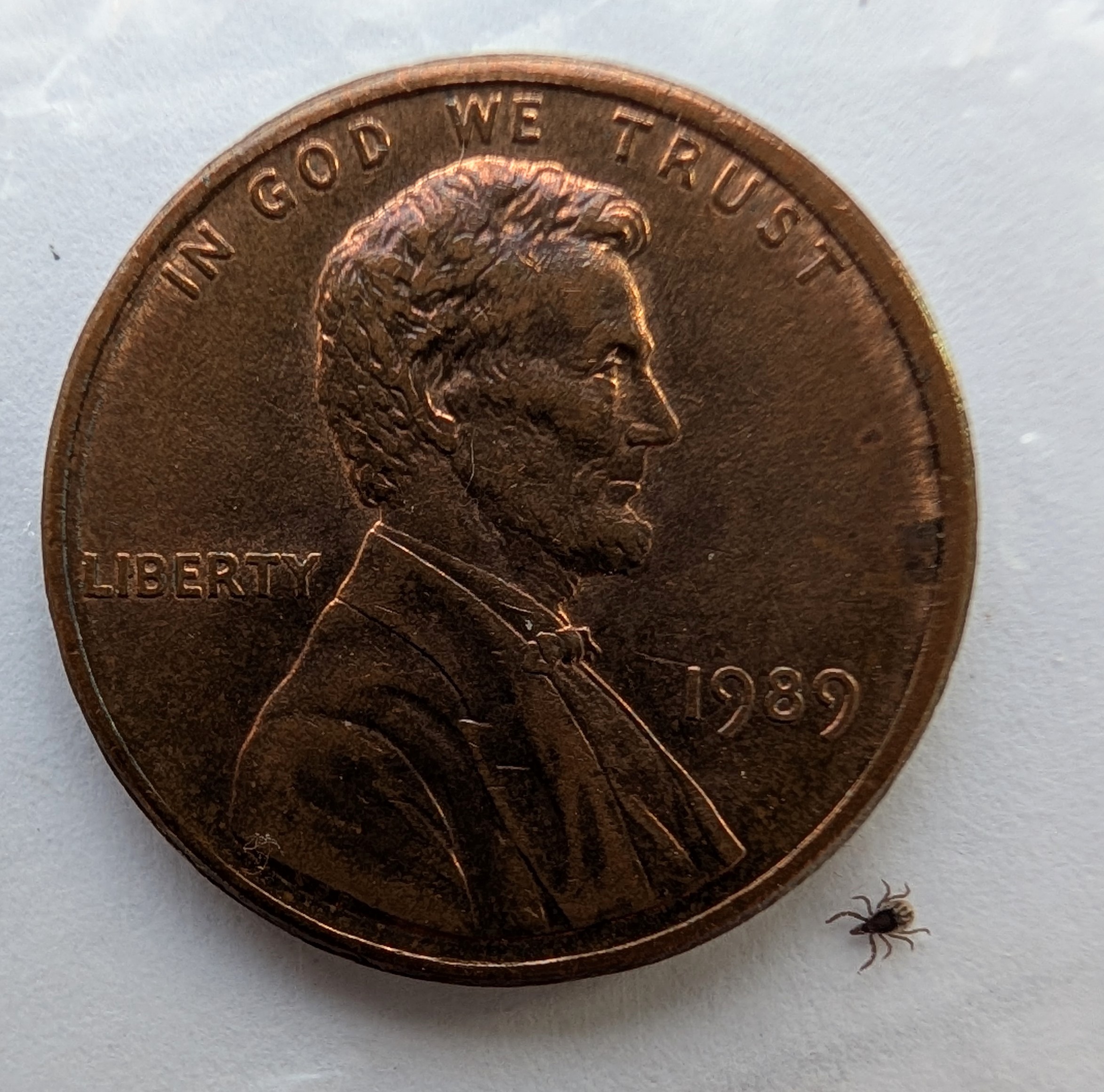
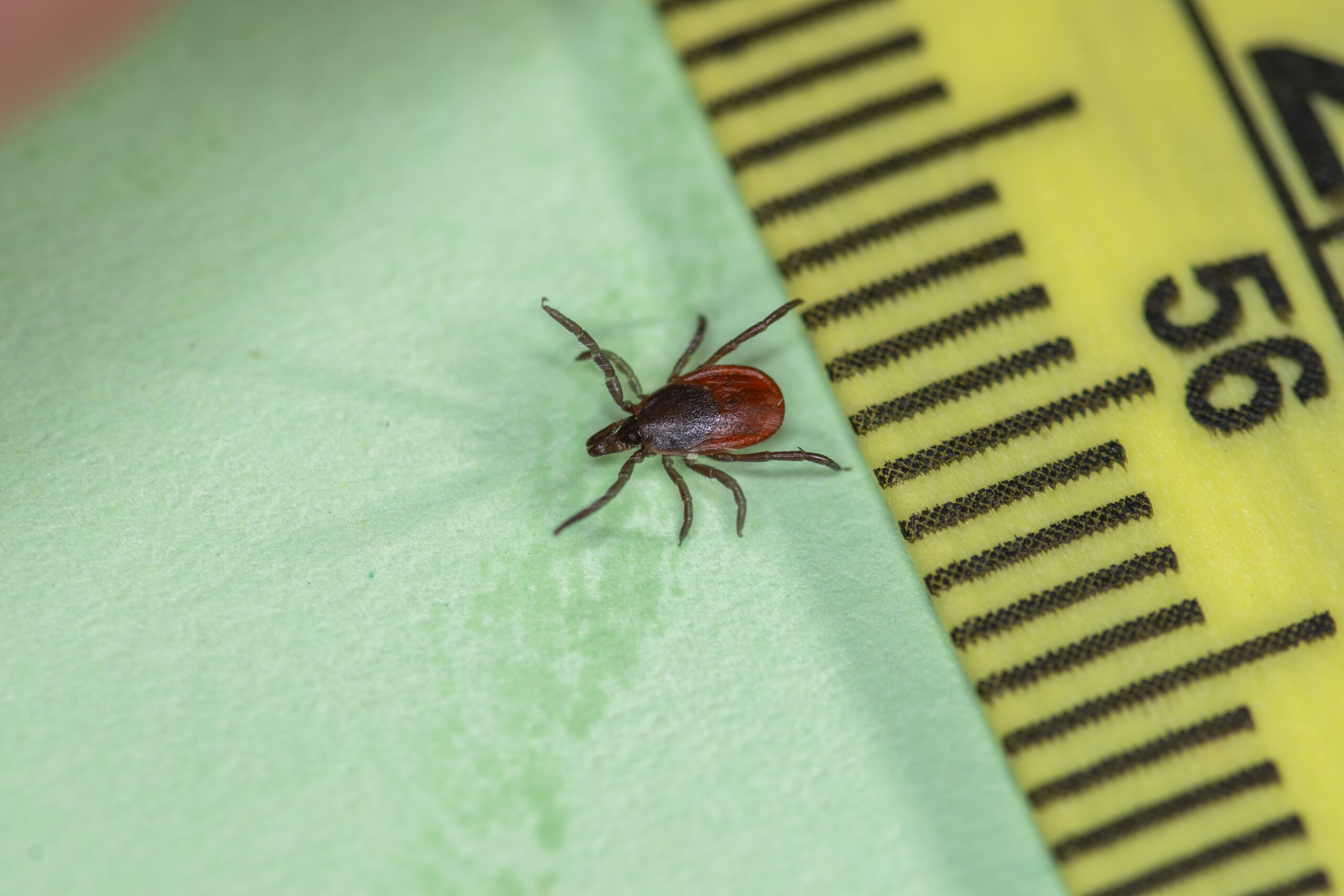
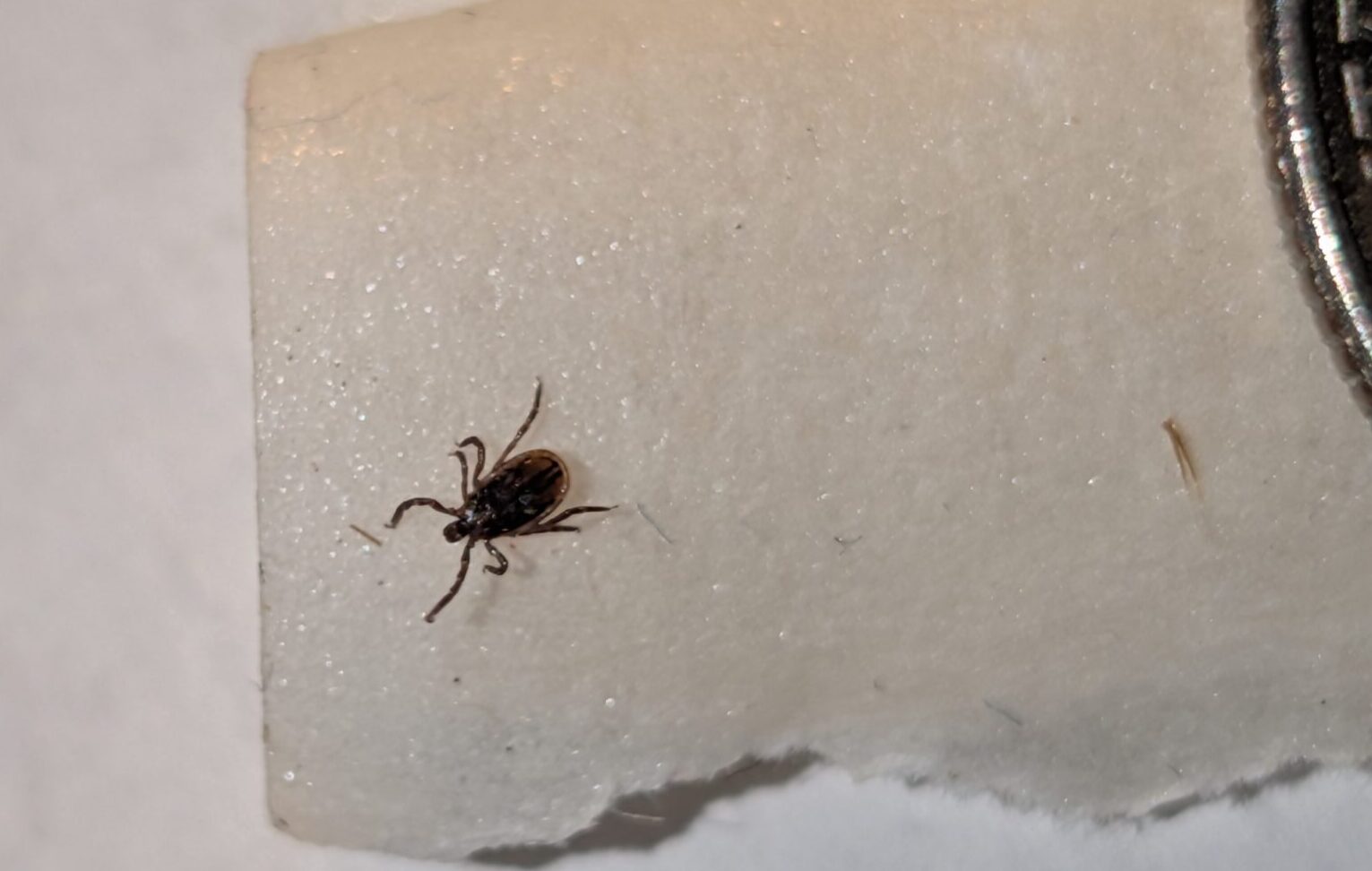
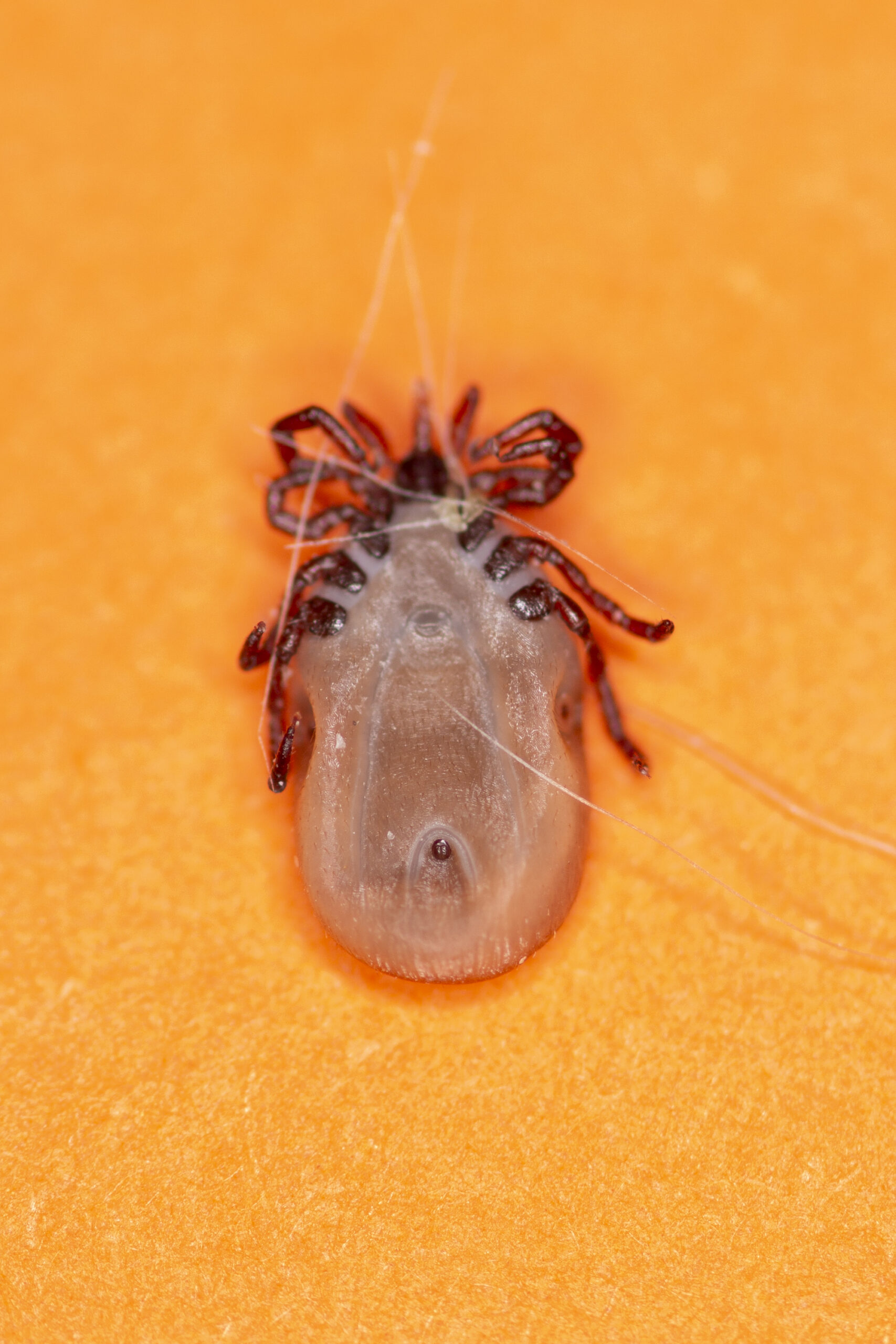
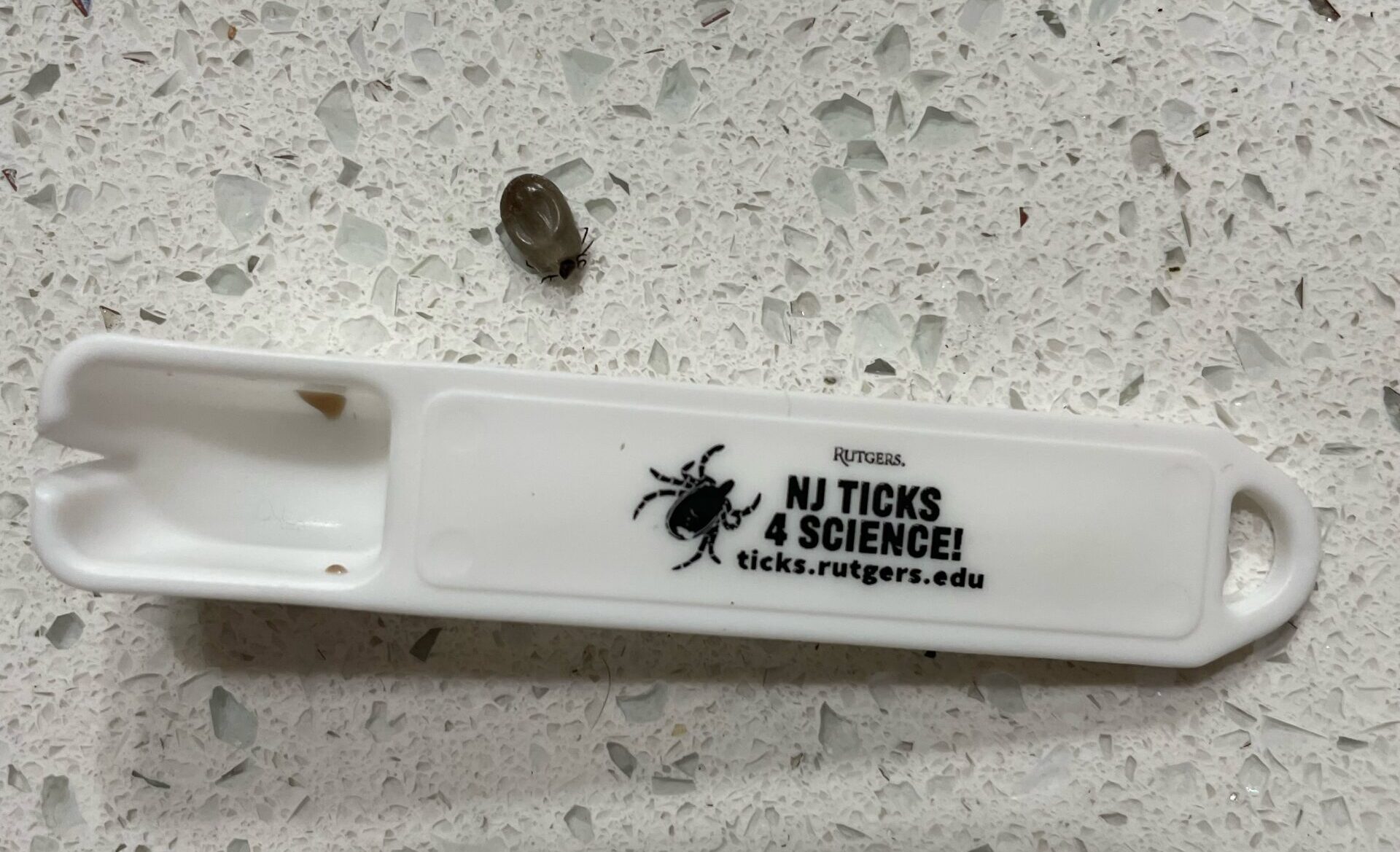
Blacklegged (deer) Tick
Scientific name: Ixodes scapularis
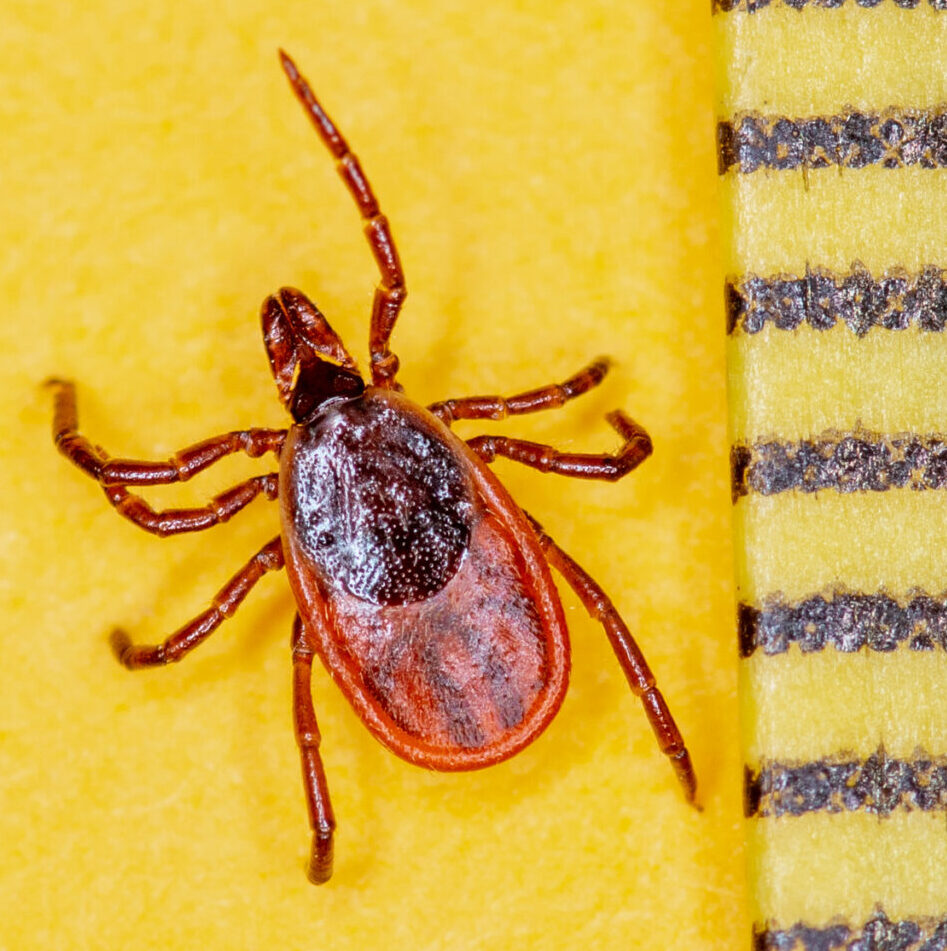
Blacklegged ticks are the only ticks known to transmit (i.e. vector) Lyme Disease, an inflammatory disease caused by a spirochete bacteria, Borrelia burgdorferi, in New Jersey. They can also transmit Anaplasmosis, Babesiosis, Borrelia miyamotoi disease, and Powassan virus. All stages of the blacklegged tick feed on people, however nymphs and adults are most likely to transmit pathogens, and nymphs are especially dangerous because their small size makes them harder to detect. Practicing tick prevention while enjoying nature is essential to minimize your risk of contracting a tick-borne disease.
Hosts
Blacklegged ticks are found on various hosts such as field mice, chipmunks, skunks, raccoons, white-tailed deer, dogs, and people.
Habitat
Wooded areas in New Jersey include forest edges along paths or trails. This tick is very sensitive to drying and is active mostly in shaded areas and early in the morning and late in the evening.
Active Months
Tick Larvae Active from April to November, peak abundance occurs from August to October. Larvae feed primarily on small mammals, such as field mice and birds, which are pathogen reservoirs. Tick Nymph Active from April to November, peak abundance occurs from May to July. Nymphs feed on small to large mammals ranging from mice to deer and people. Tick Adult Active from October to April, peak abundance in Fall and Spring but can be found throughout Winter when temperatures are above freezing. Adult blacklegged ticks feed primarily on large mammals, including deer and people.

Bar chart showing blacklegged tick submissions from 2022 to 2026 by month, separated by life stage (larva, nymph, adult).
Locations in NJ
This tick species is distributed statewide and is relatively common. However, in the 1940s, blacklegged ticks were not listed in New Jersey. As recently as the early 1980s, this tick species was restricted to southern New Jersey, especially the coastal plains.
Map of New Jersey showing the number of blacklegged tick submissions by ZIP code from 2022 to 2026, with darker shades indicating higher numbers of submissions.
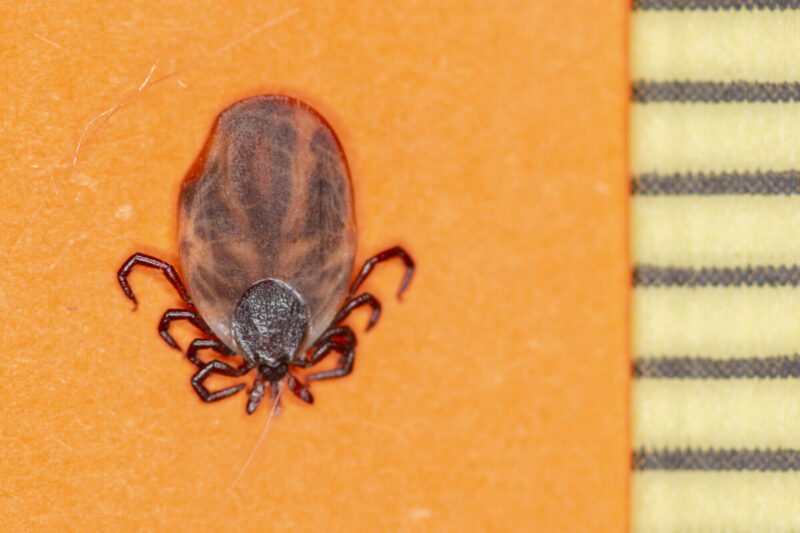
Blacklegged (deer) tick at different stages and levels of engorgment