American Dog Tick
Scientific name: Dermacentor variabilis
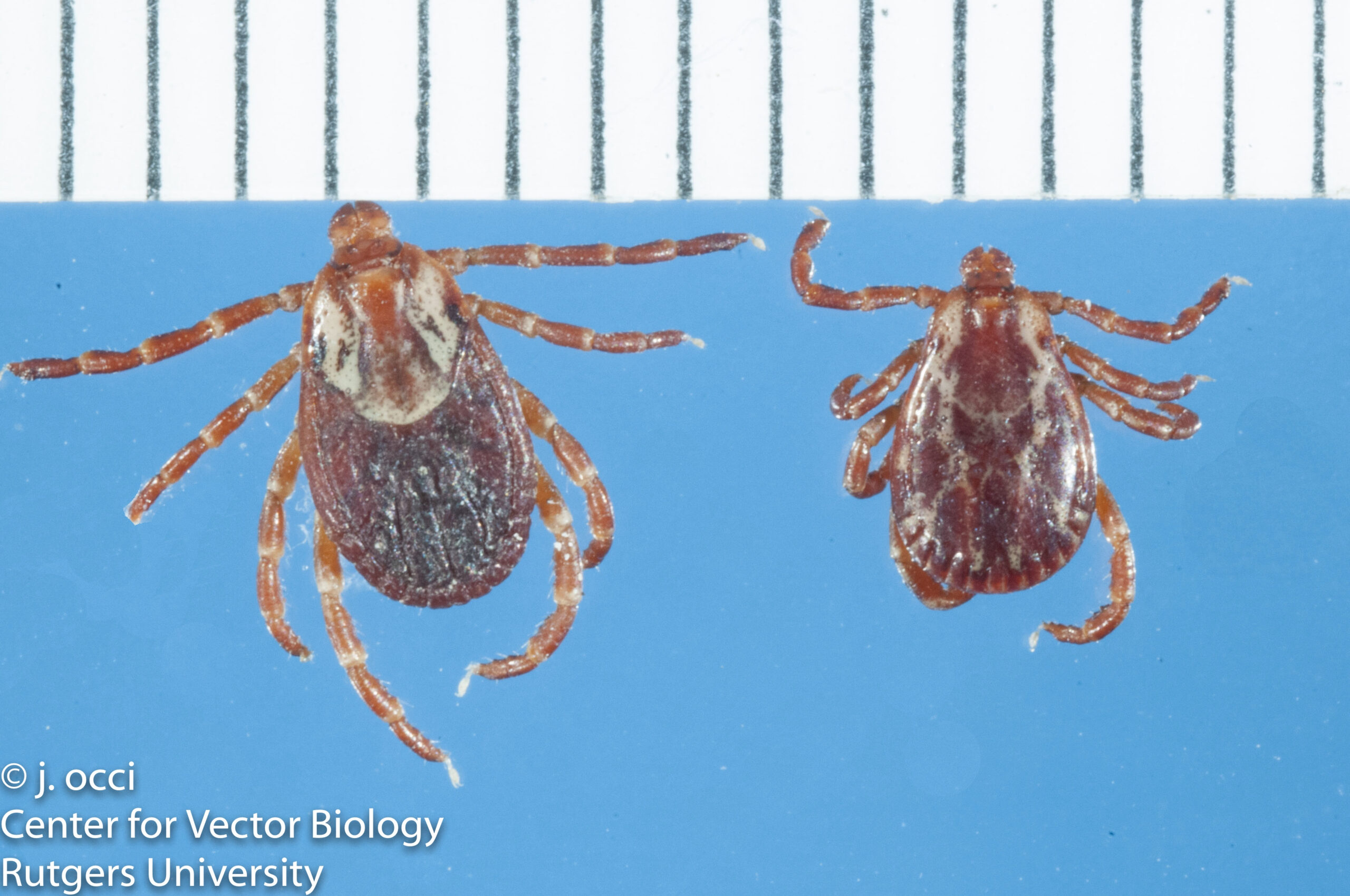
⭐️ A frequent human biter
Hosts
American dog ticks feed on small mammals such as white-footed mice, meadow voles, rats, deer, livestock, dogs, and people. Note: The only life stage that actively bites people are adult American dog ticks. The larvae and nymphs feed on small wild mammals that live in burrows. After feeding, engorged larvae molt into nymphs inside the burrows and feed again on the same host. Only adults venture outside looking for larger mammals such as livestock and deer.
Habitat
Tree-line edges with barely any tree coverage, grassy fields, meadows, and areas of tall grass bordering trails used by animals. In urban areas, American dog ticks may be present in vacant lots, utility rights-of-way, and roadsides with overgrown grass.
Active Months
American dog ticks are active throughout New Jersey from March through September, with adult peak abundance occurring in April through July.
Locations in NJ
These ticks occur statewide.
Map of New Jersey showing the number of American dog tick submissions by ZIP code from 2022 to 2026, with darker purple shades indicating higher numbers of submissions.